
基本信息
起订量:500 kg
单净重:25 kg
商品介绍
Flame Retardant
XF - 8303G
| Test Item | Unit | Standard |
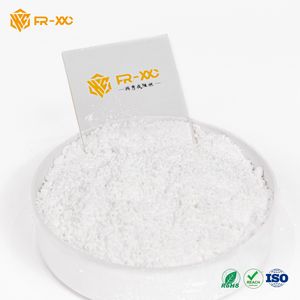
| Appearance | - | White flowing powder |
| pH value | - | 6.7 - 7 |
| Melting point | °C | 95 - 115 |
| Decomposition temperature (1% TGA) | °C | >350 |
| Effective substance content | % | ≥99.8 |
| Solubility | - | Partially soluble in water |
Widely applicable to PC electric meters, panels, electrical casings, router casings, etc
| Application Description | Addition Suggestion | UL94 V - 0 |
| FR - PC | 0.3 - 0.4% + anti - dripping agent 0.4% | 1.5 - 2.0mm |
| FR - PC | 0.3% + anti - dripping agent 0.3% | Above 2.0mm |
Organosilicon flame retardants operate based on the condensed - phase flame - retardant mechanism, achieving flame - retardant effects by generating a char layer and enhancing the antioxidant properties of the char layer. After adding organosilicon flame retardants, they migrate to the material surface, forming a polymer gradient material with a high - concentration organosilicon flame retardant layer. Once ignited, it forms a unique polyorganosiloxane char layer containing Si - C and (or) Si - Si bonds, which serves as an inorganic oxygen - isolation thermal protection layer. This layer prevents the escape of combustion decomposition products and inhibits the thermal decomposition of the polymer material, thus achieving the goals of flame retardancy, smoke suppression, and low toxicity.
- High cost - effectiveness, meeting cost - reduction demands.
- Good dispersibility. When combined with proper production processes, it can achieve relatively stable flame - retardant performance.
- Stable structure and excellent thermal stability, without corroding molds, sprues, and screws.
- Has little impact on the physical properties of PC (such as melt index, heat distortion temperature HDT, and Izod impact strength).
- Free of halogens such as Fluorin, chlorin, and bromin, making it an absolutely environmentally - friendly halogen - free flame retardant
25kg/ bag;
Transport according to general chemicals and store in a dry and cool place to avoid direct sunlight.